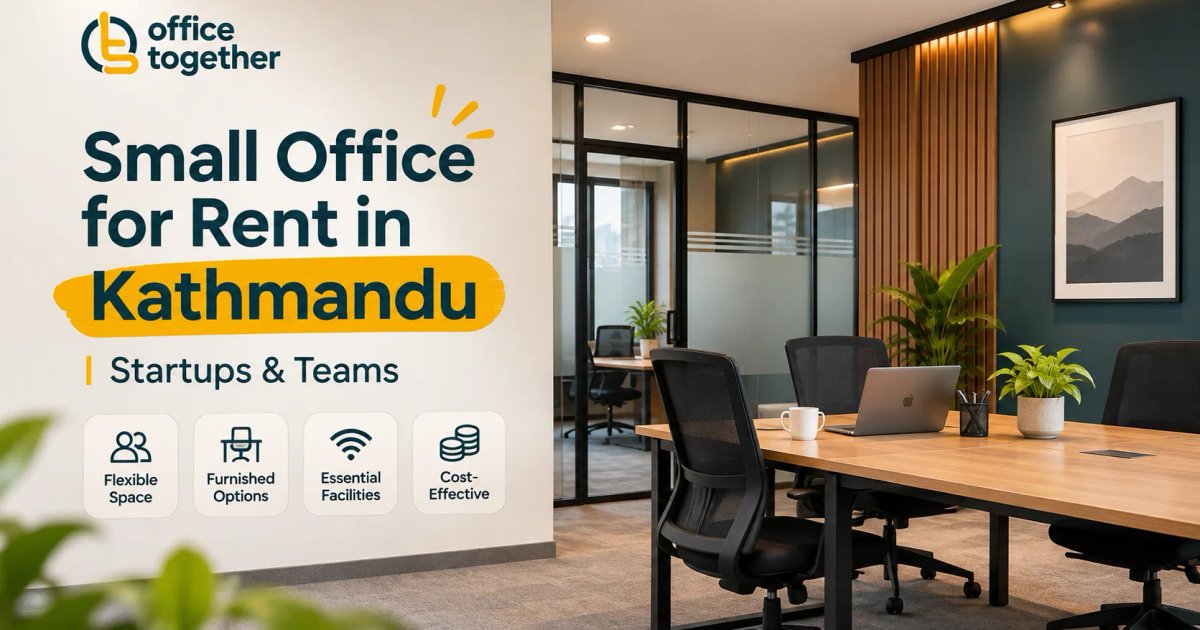
Startups and small teams located in Kathmandu can rent private offices, furnished offices, or shared offices depending on the size of the team, the budget they have, and their working needs. A small office for rent offers a designated workspace without incurring costs of maintaining a big commercial space.
Choosing an appropriate size for the office is critical for any expanding organization. It will be costly to rent too much space, as it will lead to higher rent charges, higher electricity charges, cost of furnishing, and even maintenance. A smaller, properly arranged office can support daily operations while keeping these expenses under control.
This guide explains how to choose a small office in Kathmandu, calculate workspace requirements, compare rental options, and find a suitable location without unnecessary overhead.
What Is Considered a Small Office Space?
A small office is a small workplace that is meant to be used either by one person or a small group. It may have a few workstations, an enclosed cabin, or even a specific room for the employees to carry out their work in. There is no standard size for a small office since the size is dependent on the number of employees, furniture arrangement, and type of business.
For instance, a consultancy firm with two people may require just an office with two desks and chairs. On the other hand, a software development company with five people will require more computer stations and areas for internal meetings. Both firms can operate from small offices, but have different space requirements. There are also some small offices that offer meeting rooms, kitchens, receptionist services, and parking facilities.
How Much Office Space Does a Small Team Need?
The right office size depends on the number of employees working on-site, the furniture required, and how the team uses the space. A business should have enough room for comfortable movement and daily activities without paying for unused floor space.
Team size
Suitable office option
Main requirements
1 to 2 people
Small private room or dedicated desks
Workstations, internet, privacy
3 to 5 people
Compact private office
Desks, storage, team collaboration
6 to 10 people
Larger private office or team workspace
Multiple desks, movement space, meeting access
More than 10 people
Expandable office or multiple rooms
Additional workstations, suitable layout, shared facilities
This is just an example of planning, not the set capacity of the rooms. The number of people that can be accommodated in an office varies from the floor area of the office, its layout, and the furniture in it. It is recommended that companies evaluate the premises before renting out.
Calculate the Number of Employees Using the Office
Firstly, take into account the number of workers that will be working simultaneously in the office space. For example, ten workers in a company don't necessarily require ten workstations if the workers work from home or attend the office on selected days. However, companies with set working hours and full attendance in the office should ensure that each worker is provided with a proper workstation. This would help to avoid any unnecessary costs incurred due to renting.
Consider Desks, Furniture, and Movement Space
The office must have enough space to accommodate all the required desks. There must be sufficient space within which the workers will be able to maneuver in the office, move around the furniture, store materials, and do work without disturbing other employees. The design must also facilitate easy maneuvering when using doors and shared equipment. Desk arrangement, room shape, available electrical outlets, ventilation, and whether the furniture leaves enough usable space must be checked before renting an office.
Plan for Future Team Expansion
Startups need to take into account future expansion of the company when choosing an office, but that does not necessarily mean that it should right away rent several rooms. Thus, for instance, a startup consisting of three people, which plans to recruit two more, can examine the possibility of having more workstations or even a bigger room in the future. It should be remembered that one also needs to inquire about the availability of such services from the rental company.
What Types of Small Offices Are Available for Rent in Kathmandu?
Small businesses in Kathmandu can choose between private office rooms, furnished offices, coworking spaces, and commercial offices. The options vary based on privacy, tenancy arrangement, facilities, and preparation of space.
Private Office Rooms
A private office room is a special workspace reserved for use by one firm or group. The room provides higher privacy levels for private conversations, phone calls with clients, and other business operations than a communal workspace. Private offices are ideal for firms that operate in consultancy, IT departments, and businesses that handle confidential information. With different providers, the office can have furniture and access to common facilities.
Fully Furnished Small Offices
A well-furnished small office is equipped with necessary furniture items like desks, chairs, and workstations so that workers can immediately start their jobs without having to buy each item separately. Some well-furnished offices even offer facilities like internet, reception services, cleaning, and use of communal amenities. Such arrangements are helpful for entrepreneurs who require an office urgently and don’t want to incur too many setup costs.
Shared Offices and Coworking Spaces
Shared offices and coworking spaces enable people to share a workspace within a single office. Companies could pay for an individual desk space or rent the space. This can suit freelance workers or remote workers who would not need a separate office space. But for teams who require frequent confidential talks, they need to be concerned about the noise level and seating space available.
Traditional Small Commercial Offices
Traditional office rentals are generally done by renting a commercial room, flat, or portion of a building from an actual property owner or the landlord. There is more flexibility in arranging the furnishings and managing the work environment, but at the same time there might be a necessity for purchasing the furniture, organizing the internet connection, arranging the cleaning services, and paying utility bills separately.
What Facilities Should a Small Office Have?
A small office must provide good internet services, comfortable workstations, power supply, appropriate bathrooms, and safety at the workplace. Other amenities, including meeting rooms, reception, cleaning, and parking, depend on the nature of the business and its operations.
Reliable Internet and Electricity
Reliable internet and electricity are critical for business operations when there is use of online communication, software, video conferences or cloud systems. When looking for an office space, it is important to know whether you have access to reliable Wi-Fi connections, connection speed, electrical outlets and even alternative sources of power supply. For IT companies and other firms that conduct operations online continuously, it is also important to inquire about internet reliability and alternatives.
Comfortable Workstations and Office Furniture
Office furniture should support comfortable working conditions throughout the day. The desks must have adequate space for computers and other equipment, and chairs should provide proper support. Lighting, ventilation, and room temperatures also influence the working environment. Office furniture will help save on the cost of buying new furniture, although companies need to look into the condition and arrangement of existing furniture.
Meeting Rooms and Private Discussion Areas
Small teams might require meeting rooms for presentations, interviews, discussions, or virtual conferencing. However, the maintenance of meeting rooms within the small office may result in an increase in the private space needed. Renting an office that provides access to meeting facilities may be a better choice in cases where meetings occur infrequently. The capacity of the meeting room, procedure for booking the room, equipment, and extra costs should be considered prior to renting an office space.
Kitchen, Drinking Water, and Bathroom Facilities
A small office should have convenient access to clean bathrooms, drinking water, and basic kitchen facilities. Shared kitchens may provide space for preparing drinks, storing food, and taking short breaks during working hours. These facilities are particularly useful for businesses that do not have enough room to create separate areas within their private office. Before renting, check cleanliness, accessibility, maintenance arrangements, and whether employees can use the facilities during their normal working hours.
Reception, Cleaning, and Security
Reception, cleaning, and security services could minimize the administrative burden on the small enterprise. Receptionists could assist in managing visitors and guiding clients, and cleaning would make workspaces and communal spaces usable. Security and controlled entry into the building would also enhance the safety of the workplace. Enterprises need to ensure that the services are provided and check their hours of operation and extra costs.
Parking and Transportation Accessibility
The office needs to be easily accessible by both the employees and the visitors. Public transport accessibility, roads, traffic, and parking need to be taken into account when choosing the location. Companies that often interact with their clients need to have an office with easy access to clients. In case the employees use cars or motorcycles, companies have to confirm whether there is parking space available.
Why Is Rental Flexibility Important for Startups and Small Teams?
Flexible office rental allows startups to adjust their workspace expenses according to their actual business needs. This is useful for companies with changing employee numbers, temporary projects, limited office attendance, or uncertain long-term space requirements.
Daily and Selected-Day Office Rental
The choice of office rental either daily or on selected days is appropriate for those organizations requiring an office space for specific days. For instance, a remote working company can decide to hire an office space for meeting purposes on specific days such as project presentations and meetings with clients. The firm does not have to pay for office space for the entire month but for chosen days only.
Weekly Office Rental
A weekly office rental can be advantageous for projects, assignments, training, and businesses requiring an office space on a temporary basis. This kind of rental will enable the employees to work together for a few days without having to enter into a long-term rental contract. The rental could also assist a start-up firm to determine if the office space meets their requirements.
Monthly Office Rental
A monthly rental service is appropriate for startups and small teams who require a fixed working location. The staff will be able to have access to a consistent environment for their daily tasks, coordination, and meetings with clients. In some cases, the monthly rental service can prove to be more economical than making repeated daily reservations. However, the business must carefully consider all the costs involved.
Changing Office Space as the Business Grows
Startups may need to rearrange their workspace according to their growth or changing needs. A company running with three employees now may have to add more desks and even a bigger room later. It is essential to find out from the provider whether they can allow any modifications in terms of room size or additional workstations during the rental period. These options depend on availability and the agreement, so businesses should not assume that expansion is automatically guaranteed.
What Costs Should Startups Consider When Renting a Small Office?
The total cost of renting a small office includes the base rent and any additional expenses required to operate the workspace. Electricity, internet, furniture, maintenance, meeting facilities, and deposits can affect the overall budget. These expenses should be checked before signing an agreement.
Cost factor
What startups should check
Base rent
Monthly, weekly, daily, or per-seat charges
Office furniture
Included furniture or separate purchase costs
Electricity
Included in rent or billed separately
Internet
Available Wi-Fi and additional connection charges
Maintenance
Cleaning, repairs, and shared service fees
Meeting rooms
Included access or separate booking charges
Security deposit
Required amount and refund conditions
Parking
Available spaces and applicable fees
Contract terms
Renewal, rent adjustments, and termination conditions
A practical way to compare offices is to calculate the total monthly operating expense and divide it by the number of employees regularly using the space. Refundable deposits and one-time setup expenses should be considered separately when planning the initial budget. Comparing the full costs helps businesses understand what they will actually spend rather than focusing only on the advertised rent.
How Can Startups Avoid Unnecessary Office Expenses?
Startups can cut down their expenditures in terms of office rentals since they rent what they require, use shared amenities, don’t have huge expenditures on equipment setup and choose proper duration of time for which they are going to rent. The goal is to control operating costs without compromising essential working conditions.
Rent According to Actual Team Size
An office space that suits the existing number of workers will minimize unused space. A four-person team will probably not require a big commercial floor with many unused rooms. Getting an office space that has adequate room to handle employees will make sure that the monthly costs are affordable. The business will have to take into account the real arrangement of its work and not pay for unnecessary spaces.
Avoid Unnecessary Furniture and Setup Investments
Getting an unfurnished office will require the buying of things like desks, chairs, storage units, networking gadgets and many others. This will be an expensive undertaking for a startup company. Getting a furnished office will mean no need to buy things immediately, but it will cost differently from the unfurnished office. It is important for startups to do a comparison of all costs involved.
Use Shared Facilities Instead of Creating Separate Rooms
Shared facilities will enable companies to operate using smaller private offices without compromising the availability of essential facilities. For instance, a company that interacts with its clients on rare occasions during a year may not require a separate meeting facility. The provision of meeting areas, kitchen, reception, and toilets, among others, in the shared facilities may reduce the size of private office space.
Choose the Right Rental Duration
Choosing a suitable rental period will ensure that the business does not end up paying for space that is rarely used. The organization whose employees spend most of their time working outside the office during the week will discover that selected-day rental works better than full office rental. Conversely, a company whose employees work in the office every day can consider using monthly rental.
Review the Total Cost Before Signing
Low rental price does not always equate to low operating costs. The cost of additional services such as electricity, the internet, maintenance, meeting room facilities, and other utilities may also contribute to the overall cost. It is best to ask for an itemized quote, which will detail the things included in the price and the things excluded from it. Reviewing deposits, cancellation conditions, renewal terms, and payment requirements also helps prevent unexpected expenses after moving in.
How to Choose the Right Location for a Small Office in Kathmandu
The appropriate choice for office location for a small office in Kathmandu will depend on several factors like the commuting pattern of the employees, the availability of clients, transportation links, and other business operations. An office location in a busy commercial area could suit a business that requires meeting clients regularly. However, a suitable office location near the employees would be more appropriate if the employees operate online.
When comparing office locations, consider the following factors:
Employee commuting: Check how easily employees can travel to and from the office.
Client accessibility: Choose a location that visitors can reach without unnecessary travel difficulties.
Road access and parking: Consider traffic conditions, vehicle access, and parking availability.
Nearby services: Look for banks, restaurants, stationery shops, and other services the business regularly uses.
Noise and surroundings: Assess whether the environment is suitable for focused work and professional meetings.
Building accessibility: Check entrances, stairs, lifts, and access arrangements for employees and visitors.
A suitable office location should support regular business operations without creating unnecessary travel or rental expenses. Before making a final decision, visit the property during normal working hours to assess accessibility, traffic, surrounding activities, and the actual working environment.
Small Private Office vs Coworking Space: Which Is Better for a Startup?
A small private office would definitely suit a startup that needs constant teamwork, confidentiality, and space where to work. At the same time, a coworking office may be more appropriate for freelance and hybrid teams and those enterprises that need a smaller number of workstations. Both options can reduce the responsibility of managing a traditional commercial office, depending on the facilities and rental arrangements.
Factor
Small private office
Coworking space
Privacy
Dedicated room for one team
Shared working environment
Team collaboration
Suitable for regular internal discussions
Depends on seating arrangements
Initial setup
Lower when furnished
Usually minimal for equipped desks
Working environment
Greater control over a dedicated room
Shared with other users
Facilities
Private and shared facilities may be available
Common facilities are typically shared
Rental structure
Often charged per room or rental period
Often charged per desk or access plan
Best suited for
Small teams needing a regular workspace
Freelancers, remote workers, and small hybrid teams
The better option depends on how employees work together. A startup that handles confidential client information or needs frequent internal discussions may prefer a private office. A business with one or two employees who mainly work independently may find coworking more practical. Comparing privacy, facilities, attendance, and total cost will help determine the right choice.
What Should You Check Before Renting a Small Office?
Before renting a small office, companies must check out the premises for its amenities and go through the lease agreement. While a particular property might look promising in pictures, it might not be suitable for use due to certain shortcomings. Visiting the room will help decide whether it suits the company's needs.
Use this checklist before making a booking:
Confirm how many employees can comfortably work in the office.
Check the desk arrangement, available furniture, and usable floor space.
Test the internet connection and inspect electrical outlets.
Check lighting, ventilation, and room conditions.
Ask about meeting room availability and booking charges.
Inspect bathrooms, kitchen facilities, and common areas.
Confirm parking availability and building access hours.
Review the rental period, payment terms, and security deposit.
Ask whether additional workstations or larger rooms may be available.
Request a written breakdown of rent and any additional charges.
A survey of the working space before renting enables companies to understand what limitations can be expected from the space, thereby avoiding any unforeseen costs. It is essential to verify what amenities are covered by the quoted rent amount.
Rent a Small Office in Kathmandu with Office Together
Office Together provides solutions in flexible furnished office space for start-up organizations, small businesses, and teams that need practical work environments. Companies have the option to choose their own offices based on their team sizes, working time periods, and space facilities. Office Together services include fast internet, shared kitchen and bathroom facilities, receptionist services during working hours, and free underground parking. There are separate plans for the meeting room charges at varying prices. Monthly office renters pay their electricity charges separately.
Office Together provides options for daily, weekly, day selection, and monthly rentals that enable businesses to select the rental period based on their needs. It is advised to check the room availability and rental rates before making the booking.
Explore available office spaces at Office Together and request a quotation based on your team size, preferred rental dates, and required facilities.
FAQs
1. What Is the Best Office Size for a Small Startup?
The best office size is based on the number of workers, the number of workstations, and the tasks to be done. Pick a room that is big enough for work but does not waste space.
2. Can I Rent a Small Office for Two or Three People in Kathmandu?
Yes, private office rooms and furnished workspaces for two or three people are available in Kathmandu. Check the seating capacity and facilities before booking.
3. How Much Does a Small Office for Rent in Kathmandu Cost?
Small office rent in Kathmandu depends on location, size, furnishing, facilities, and rental duration. Request a quotation that includes any additional charges.
4. Can Startups Rent a Fully Furnished Small Office?
Yes, startups can rent an office that is already furnished with tables, chairs, and other essential facilities. Such offices can help save on furniture costs.
5. Is a Private Office Better Than Coworking for a Small Team?
A private office will work for a team that requires some privacy and a dedicated workspace, while the coworking space is more suitable for freelancers and teams who can work anytime.
6. Can I Rent a Small Office for Just a Few Days?
Yes, some workspace providers in Kathmandu offer daily, weekly, and selected-day rentals. Availability and rental conditions depend on the provider.
7. What Facilities Are Usually Included in a Small Office Rental?
Small offices may include furniture, internet, electricity, and access to shared facilities. Confirm the exact inclusions and additional charges before renting.
8. Do Small Office Rentals Require a Long-Term Contract?
No, not all small office rentals require a long-term contract. Flexible providers may offer daily, weekly, or monthly arrangements.
9. Can I Increase My Office Space When My Team Grows?
Yes, companies can be relocated to larger spaces or add workstations as long as they are available. Make sure to consider such possibilities before renting.
10. What Should I Check Before Renting a Small Office in Kathmandu?
Check seating capacity, internet connectivity, availability of electricity, furniture, location, parking facilities, and rental costs for the workspace. Also check payment terms and the workspace itself.