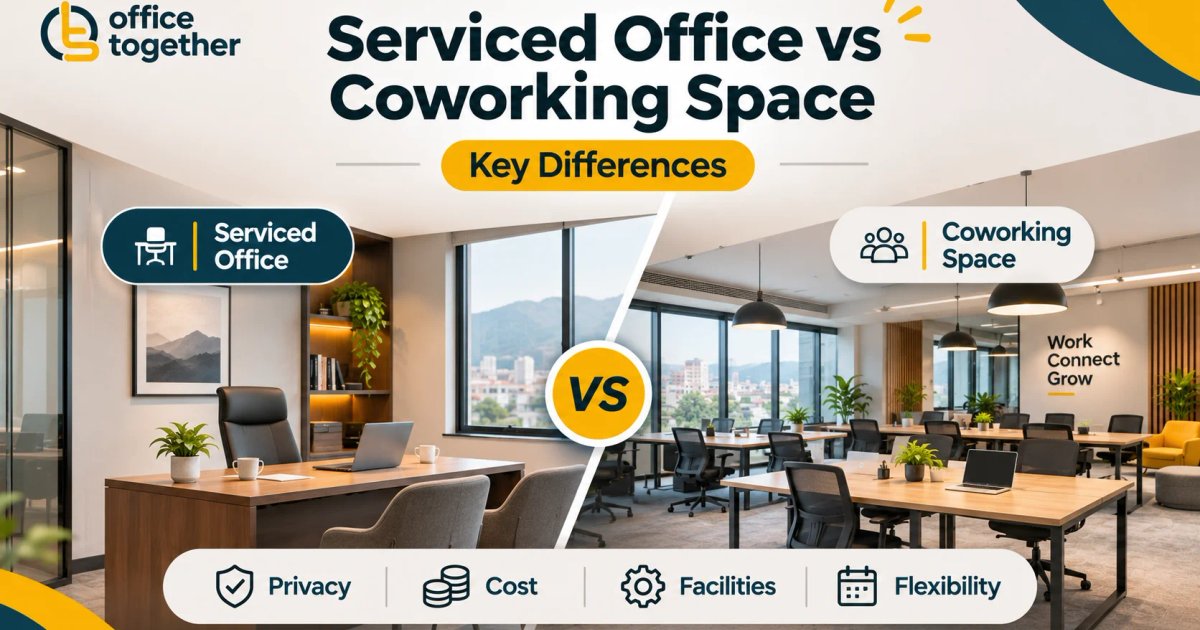
A serviced office is a ready-to-use, professionally managed workspace that usually comes with a private office and the basic facilities you need. A coworking space usually has shared workstations where individuals and different businesses work in the same room. The main difference is how private the space is and how it is arranged.
Both can have similar facilities, like furnished desks, internet, meeting rooms, kitchens and reception services. Some coworking providers also offer private offices, and some serviced offices have shared facilities outside the private rooms.
Which one suits you depends on your team size, budget, privacy needs and working schedule. This guide compares features, rental costs, facilities and flexibility to help you decide which option fits your business.
What Is the Difference Between a Serviced Office and a Coworking Space?
A serviced office usually gives one business a private, managed workspace, while a coworking space usually has shared working areas for individuals and different companies. Both may include furniture, internet, maintenance and access to common facilities, but the working environment and rental terms can differ.
Features
Serviced Office
Coworking Space
Workspace
Usually a private office or dedicated room
Shared desks or open working areas
Privacy
Greater privacy for a business
Limited privacy in shared areas
Office furniture
Usually furnished
Usually furnished
Internet and utilities
Often included or managed by provider
Often included in membership
Reception services
Commonly available
Depends on provider
Meeting rooms
Private or shared, depending on the office
Usually shared or bookable
Rental pricing
Often charged per office or room
Often charged per desk or membership
Rental flexibility
Depends on provider and agreement
Often offers short-term plans
Working environment
Dedicated workspace for a team
Shared environment with other professionals
Suitable for
Small businesses, teams, consultants
Freelancers, remote workers, individuals
These differences are general and can vary between providers. A coworking provider may offer private furnished rooms, and a serviced office may charge extra for electricity or meeting rooms. So compare the actual features of a workspace and do not rely only on the label.
What Is a Serviced Office?
A serviced office is a furnished workplace where the property provider manages the building and supplies the essential facilities and services. These can include desks, chairs, internet, cleaning, reception, maintenance and meeting rooms. A business can move into an available office without setting up every part of the workspace itself. Startups, established companies, consultants and small teams often use serviced offices because they want a professional place to work.
Most serviced offices give you a dedicated room or office area for regular work. Your employees work in their own space and share common facilities like kitchens, bathrooms and meeting rooms where they exist. Rent may be monthly or for another agreed period. Not every serviced office includes all utilities and facilities in the base rent, so confirm what the provider manages and what you must pay for separately.
What Is a Coworking Space?
A coworking space is a shared workplace where freelancers, remote workers, entrepreneurs and employees from different companies use common working areas. It usually provides desks, chairs, internet and shared facilities, and you do not have to rent a whole private office. Some spaces offer hot desks that you can use when one is free, while others have dedicated desks reserved for specific members.
Coworking suits people who need a professional place to work but not a separate office room. It also lets you meet other professionals and work around people from different industries. Shared areas can have more talking, movement and interruptions than a private room. Some providers deal with this by offering quiet zones, meeting rooms and private offices.
How Do Serviced Office and Coworking Space Costs Compare?
Serviced offices usually charge for a private room or dedicated office, while coworking spaces usually charge per desk, day or membership. Neither is always cheaper, because the total depends on the number of employees, the facilities you need and how long you rent.
Rental Pricing and Payment Structure
Serviced Office: Serviced offices usually charge a fixed amount for a private room or dedicated office space. The price may depend on room size, location, included facilities and rental length. A business with several employees can split the cost of one private office instead of paying for separate memberships. Some providers also offer daily, weekly or monthly rentals.
Coworking Space: Coworking spaces usually charge per workstation, day pass or monthly membership. This can cost less for freelancers and individuals who need only one desk. If you have several employees, add up all the memberships first, because renting many desks can sometimes cost more than a private office.
Included Facilities and Additional Charges
Serviced Office: Serviced offices commonly provide furnished workstations, internet, maintenance and access to shared facilities. Some also offer reception, cleaning, parking and meeting rooms. Electricity, meeting room bookings and other services may be charged separately. Confirm what is included before you compare prices.
Coworking Space: Coworking spaces usually include desks, internet and access to common working areas. Depending on the membership, you may also get kitchens, meeting rooms, printing and other services. Private meeting rooms, parking and extra equipment may cost more.
Total Cost for Individuals and Small Teams
Serviced Office: A serviced office can be good value for a small team that needs its own desks and a private space. Instead of paying for separate desk memberships, the business can rent one room for everyone. A furnished office also cuts setup costs, because you may not need to buy desks, chairs or other basic furniture.
Coworking Space: Coworking can cost less for individuals and for teams that rarely come to the office. A freelancer may need only one desk, and a hybrid team may book workstations on selected days. When several employees use the space regularly, compare the total membership cost with the price of a private office.
How Do Privacy, Facilities and Flexibility Differ?
Serviced offices usually give you more privacy and control over your own workspace, while coworking spaces offer a shared environment. Both may provide similar facilities and flexible rental options, but which one suits you depends on how your business works.
Privacy and Confidentiality
Serviced Office: A serviced office usually gives you a private room, so your employees do not share their immediate workspace with other businesses. This helps with confidential discussions, client calls, financial work and projects with sensitive information. A dedicated room also gives your team more control over its working environment.
Coworking Space: Coworking spaces usually have open areas where people from different companies sit close together. That can limit privacy during calls, meetings and confidential tasks. Some providers offer phone booths or private meeting rooms, but availability and use may depend on your membership.
Workplace Environment and Team Collaboration
Serviced Office: A serviced office gives employees from the same company a dedicated place to work together regularly. Your team can discuss projects, coordinate tasks and keep its preferred setup without sharing the room with other businesses. This suits companies that need frequent internal communication.
Coworking Space: Coworking spaces bring freelancers, entrepreneurs and employees from different businesses into one environment. That can open up chances for networking and professional contact. Shared areas can also have more talking and movement, which may hurt concentration or make frequent team discussions hard.
Rental Terms and Flexibility
Serviced Office: Serviced offices may offer daily, weekly, monthly or longer rentals, depending on the provider. A business can choose a rental period that fits its needs without necessarily signing a traditional long-term lease. Some providers also let you change rooms or add workstations, depending on availability and rental conditions.
Coworking Space: Coworking spaces commonly offer daily passes, flexible desk access and monthly memberships. These work well for individuals and teams that do not need permanent office space. You may be able to change your plan, but check minimum commitments, cancellation terms and access limits.
Meeting Rooms and Professional Facilities
Serviced Office: Serviced offices may offer meeting rooms, reception services, internet, kitchens and other shared facilities in the building. You can use your private office for daily work and book extra rooms when you meet clients or hold discussions. Meeting facilities and other services may have separate booking charges.
Coworking Space: Coworking spaces also offer common facilities like meeting rooms, kitchens, reception areas and shared equipment. You usually get access based on your membership plan. Meeting rooms may need to be booked in advance, and some providers charge extra based on room size or usage time.
Workspace Customization and Business Identity
Serviced Office: A serviced office may let you arrange your workstations, keep regular seating and store approved equipment in a dedicated room. Some providers also allow limited branding or office changes. Furniture changes, signage and other modifications usually need the provider’s approval.
Coworking Space: Coworking spaces usually have standard workstations and shared furniture that you cannot change much. Hot desk users may sit at a different desk each visit, while dedicated desk members have more consistent seating. If your business needs a fixed layout, permanent equipment or a stronger brand identity, shared coworking areas may not fit well.
Which Is Better for Freelancers, Startups and Small Businesses?
Serviced offices usually suit teams that need privacy and a regular working environment, while coworking spaces can be better for individuals and businesses with flexible attendance. The right choice depends on employee numbers, daily activities, budget and workspace needs.
Freelancers and Independent Professionals
Serviced Office: A serviced office may suit independent professionals who need a private place for confidential work, regular client meetings or focused tasks. Consultants, accountants and other professionals who handle sensitive information may benefit from having their own room. Renting a whole office may be more than you need if you only want a basic workstation.
Coworking Space: Coworking is often a practical choice for freelancers, designers, developers, writers and other independent professionals. You get a furnished workstation and shared facilities without renting a complete office. It can also give you a chance to meet other professionals while keeping your commitments flexible.
Startups and Small Teams
Serviced Office: A serviced office suits startups and small teams that need dedicated desks, privacy and regular collaboration. A furnished private office lets employees work together without spending much on setup. It can also give you a steady working environment as the business grows.
Coworking Space: Coworking can suit early-stage startups with only a few employees or limited office attendance. Team members can rent individual desks without committing to a whole private room. As the team grows or needs more private discussions, a dedicated office may become more practical.
Consultants and Client-Facing Businesses
Serviced Office: Serviced offices can help consulting firms, agencies and other businesses that meet clients often. A dedicated workspace gives you privacy for discussions and a steady base for daily work. Reception services and meeting rooms can also help you manage appointments and professional meetings.
Coworking Space: Coworking can work for consultants and client-facing professionals who need meeting rooms now and then but not a permanent private office. You can use a shared workstation for regular tasks and book meeting rooms when needed. Check whether the space has suitable private rooms for confidential discussions.
Remote and Hybrid Teams
Serviced Office: A flexible serviced office can give remote and hybrid teams a private room for scheduled collaboration, training or project meetings. You may rent the workspace only on selected days instead of keeping a permanent office. This helps when employees mostly work remotely but sometimes need to meet in person.
Coworking Space: Coworking spaces suit remote employees who want a professional workstation outside their homes. Hybrid teams can also use shared desks when employees visit on different days. If your team needs to work together in one room, check whether the provider offers group seating or private meeting areas.
Can a Coworking Space Also Offer Serviced Offices?
Yes, a coworking provider can also offer serviced offices or private managed workspaces in the same building. For example, one workspace may have an open area with shared desks, several private office rooms, meeting rooms and common facilities. Different businesses can rent these spaces according to their needs. Private rooms can work like a serviced office when the provider also manages the facilities and services that go with them.
This is why serviced offices and coworking spaces are not always completely separate business models. A company can rent a dedicated private room while sharing the building’s kitchen, bathrooms, reception or meeting facilities with other companies. When you choose a workspace, check whether the room is private, what the provider manages and which facilities are shared. These details tell you more than the label on the building.
How to Choose Between a Serviced Office and Coworking Space
Choose between a serviced office and a coworking space based on your team size, privacy needs, working schedule and budget. Coworking is usually practical for individuals who need shared workstations, while serviced offices may suit teams that need dedicated rooms. Also think about how often your employees come to the office and whether you meet clients regularly.
Business requirement
Option to consider
One person needing a desk occasionally
Coworking space
Small team requiring a private working room
Serviced office
Freelancer wanting a flexible work environment
Coworking space
Company handling confidential client work
Private serviced office
Hybrid team needing occasional collaboration
Flexible private office or coworking
Business requiring regular client meetings
Serviced office with meeting facilities
These recommendations are general and not fixed rules. Some coworking spaces have private rooms, and some serviced offices offer short-term rentals. Before you decide, compare the layout, the facilities, the total rent and how flexible the agreement is.
What Should You Check Before Booking a Serviced Office or Coworking Space?
Before you book, check the privacy, facilities, rental charges and contract terms. Two workspaces can look alike but differ in room access, services and payment arrangements. Visiting the location and reading the rental terms can help you avoid surprise costs or a space that does not suit you.
Use this checklist when you compare workspaces:
Confirm whether the workspace is private or shared.
Check the number of available desks and seating capacity.
Review internet, electricity and maintenance arrangements.
Ask about meeting room availability and booking charges.
Confirm reception, cleaning and security services.
Check office access hours and parking facilities.
Understand the rental duration and payment requirements.
Review deposit, cancellation and renewal conditions.
Ask about additional costs and applicable taxes.
Visit the workspace before confirming the booking.
A clear rental quote should explain the base price, the included services, any extra charges and the payment terms. Comparing these details helps you pick a workspace that meets your needs without unnecessary expense.
Explore Flexible Private Office Spaces at Office Together
Office Together provides furnished private workspaces in Kathmandu for startups, freelancers and small teams that want a dedicated working environment. Businesses can use private office rooms and share facilities including fast Wi-Fi, a kitchen, bathrooms, reception support during operating hours, and free underground parking. Meeting rooms are also available through separate booking, so teams can use extra space when they need it.
Office Together offers daily, weekly, selected day and monthly rentals, depending on the available workspace. This lets businesses pick a private working area that fits their team size and schedule without necessarily signing a conventional long-term office lease. Monthly electricity charges are billed separately, so confirm room availability and any other fees before you book.
Contact Office Together to discuss your requirements and find an office that suits your business.
FAQs
1. What Is the Main Difference Between a Serviced Office and a Coworking Space?
A serviced office usually gives one business a private, managed workspace. A coworking space usually offers shared desks and working areas used by different individuals and companies.
2. Is a Serviced Office the Same as a Private Office?
Not exactly. A serviced office usually includes a private workspace with managed facilities, while a private office may require the tenant to arrange services separately.
3. Is a Serviced Office More Expensive Than Coworking?
Not always, because the total cost depends on team size, rental length, facilities and whether the workspace is charged per room or per desk.
4. Can a Coworking Space Have Private Offices?
Yes, many coworking providers also offer private office rooms. These let businesses keep their privacy while using shared building facilities.
5. Are Electricity and Internet Included in Serviced Office Rent?
Electricity and internet are often included or managed by the provider, but not always. Some offices charge separately for utilities and extra services.
6. Which Is Better for a Startup, Serviced Office or Coworking?
A serviced office may be better for startups that need private space and regular teamwork. Coworking can suit smaller teams and businesses with flexible attendance.
7. Can I Rent a Serviced Office for a Short Period?
Yes, some serviced office providers offer daily, weekly or monthly rentals. The available periods and booking terms depend on the provider.
8. Do Serviced Offices Have Shared Meeting Rooms?
Yes, many serviced offices give you access to shared meeting rooms. These may be included in the rental agreement or charged separately.
9. Is Coworking Suitable for a Team of Five Employees?
Yes, coworking can work for a five-person team if enough desks are available. A private office may be more practical when the team needs frequent discussions and privacy.
10. What Should I Check Before Renting a Serviced Office?
Check the privacy, seating capacity, furniture, internet, electricity, meeting facilities and total rental charges. Also review the deposit, cancellation policy and rental agreement before you book.